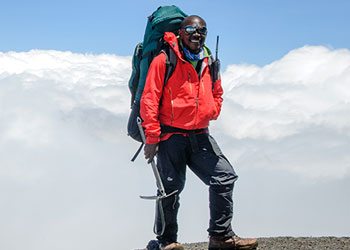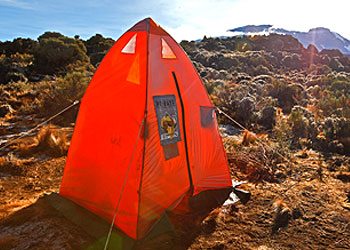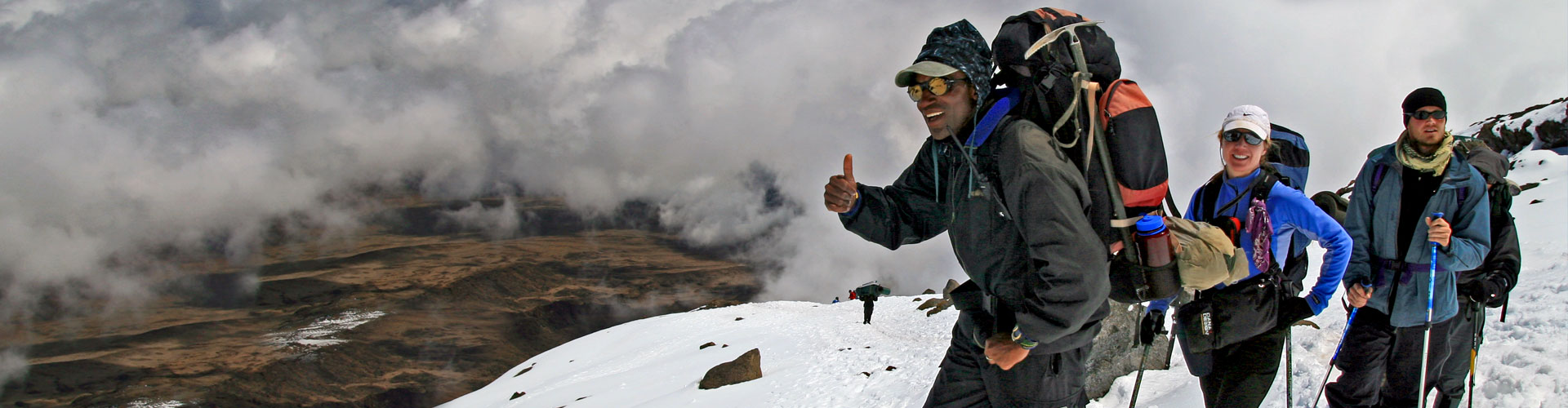
We are committed to the well being of our trekkers, as well as our guides and porters.
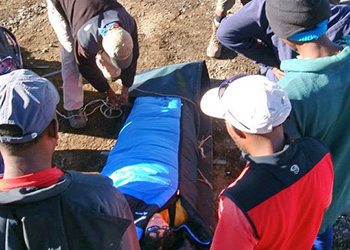
Our Kilimanjaro guides are medically trained as Wilderness First Responders and have extensive training in evacuation procedures.
It is this skill, training and experience that impede dangerous situations from occurring in the first place; we never trust your safety solely to the whims of fancy gadgets and potentially unreliable gizmos. We are, however, always prepared.
The following safety equipment is standard on all of our Kilimanjaro treks:
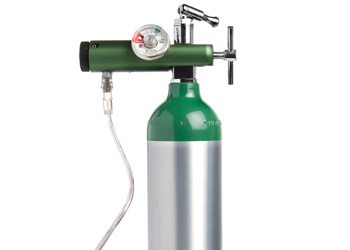
Oxygen
for emergency use
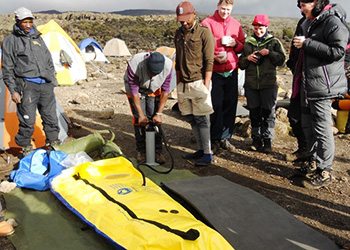
Hyperbaric Chamber
Gamow bag
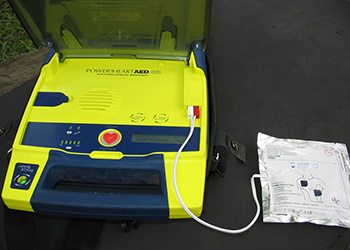
AED Heart Saving Device
Automated External Defibrillator
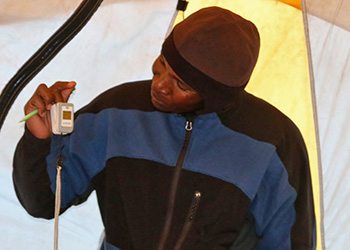
Pulse-oximeter
carried by the head guide as a diagnostic tool for acclimatization
Mobile Phones
carried by the head guide and all assistant guides, for daily communications with our base in Arusha
VHF 2-way Radios
to facilitate communication between the guides
Stretcher and Convertible Litter
Comprehensive Medical / First Aid Kits
as per WFR/NOLS USA guidelines
Satellite Phone
carried by the head guide for emergencies (on Western Approach route)

Our U.S. Kilimanjaro Specialists are dedicated to ensuring that you are thoroughly prepared for your Kilimanjaro trek.
While it is important to train far in advance and to be in great physical shape before embarking on a journey to the Roof of Africa, your chance of reaching the summit depends primarily on how your body reacts at altitude.
High altitude medical specialists agree that there is no correlation between your fitness level, age, or gender and your susceptibility to altitude sickness. It is your rate of ascent that is the single most important factor in proper acclimatization.
Acclimatization is Key
We offer a 9-day Western Approach Route Trek (day summit), 10-day Grand Traverse (day summit), and 6-day Umbwe Route Trek (night bid and early morning summit).
Thomson treks include two nights at altitude and acclimatization wildlife viewing hikes prior to the trek, as well as maximum acclimatization on the mountain.
Success Rate
While other groups trek 5-7 day routes with 50% success, we have 98% summit
success on the 9-day Western Approach, 100% on the 10-day Grand Traverse,
and 96% on the 6-day Umbwe Route.
Although there are many mysteries behind why certain individuals are more
prone to altitude sickness than others, one thing the experts agree on is
that picking a longer route with maximum rest and acclimatization time will
increase your chances of reaching the summit.
.